
PALP Menu
What Do You Care About Enough to Do Something About?
Maybe you've seen a problem no one talks about, or cared about an issue without knowing what to do. PALP gives you the structure, coaching and time to act on it.
- Choose a real community problem you care about. You don't need an idea before you start.
- Your team works on it from October through April, with coaching at every stage.
- Plans often change. Learning to adjust when something doesn't work is part of the project.
- In May, you present with your team and explain your own contribution in an individual defense.
Real PALP Projects. Real Student Impact.
PALP students have tackled homelessness, professional readiness, mental health and the environment. Plans changed and partners said no, so they adjusted and kept going. That's part of the point.
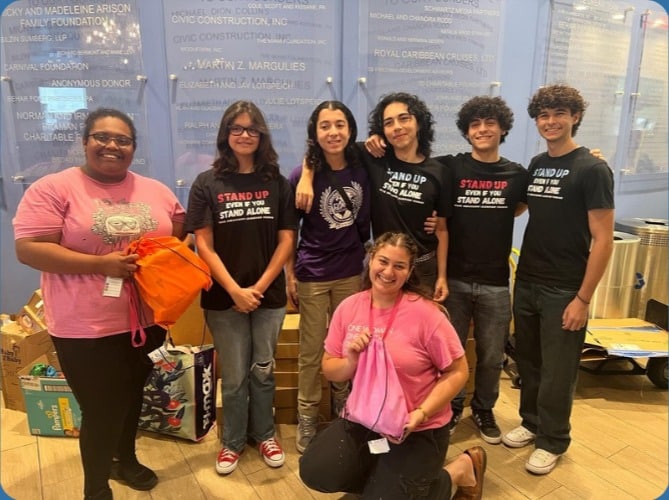
Compassion Crates Collective
Five PALP students set out to support people experiencing homelessness. Their first plan, a large park fundraiser, ran into logistical problems, so they pivoted to a donation-based project instead, placing collection boxes at schools and workplaces and assembling roughly 100 crates. When one shelter partner fell through at the last minute, the team kept searching until they found a home for every crate: Lotus House.
- A project can become stronger when the original idea changes.
- Real community work requires partners, logistics and persistence.
"Through PALP, I learned that I, too, could get involved and make a positive change in my community."Omar Mohsen, Compassion Crates Collective
What Could Your Project Be?
You don't need an idea yet. PALP helps you look at your community and ask: What isn't working, who is affected and where could you make a difference?
| If You Care About... | Your Project Might Explore... |
|---|---|
| Mental Health & Wellness | Stress, loneliness, stigma or peer support. |
| Bullying, Belonging & Inclusion | Cyberbullying, belonging, inclusion or safer spaces. |
| Homelessness & Basic Needs | Hygiene, food insecurity or finding resources. |
| Education & Opportunity | Tutoring, literacy, college information or mentoring. |
| Money & Financial Literacy | Budgeting, credit, scams or banking. |
| Environment & Sustainability | Waste, recycling, gardens or a local environmental problem. |
| Health & Healthy Living | Nutrition, exercise or access to health resources. |
| Careers & Professional Readiness | Interview clothing, résumé help or career exposure. |
| Youth Voice & Civic Life | Civic information, community listening or reaching decision-makers. |
| Animals & Community | Shelter needs, pet care or animal welfare. |
| Technology & Digital Life | Digital safety, misinformation or responsible AI. |
| Something We Haven't Listed | Good. PALP isn't giving you a menu of approved causes. If you can document a real community problem and build a responsible solution, PALP will help you explore it. |
Don't choose the project that sounds most impressive. Choose a problem you care enough about to stay with when it gets difficult.
You Are Not Doing This Alone
Staff and mentors coach you at every step, from narrowing the issue and planning outreach to measuring results and preparing your defense, without taking over your project.
You still do the work. PALP support means you learn how to move a real project forward, not that an adult quietly completes it for you.
From an Idea to Something Real
This is the same six-month journey behind the real projects above.
| Stage | What Happens |
|---|---|
| October: Discover | Pick a problem, gather evidence and form your team |
| November: Validate & Design | Confirm the need and choose your solution |
| December: Build & Launch | Get materials, permissions and logistics ready |
| January: Implement | Launch and collect evidence |
| February: Analyze | Check results and correct course |
| March: Improve | Apply your fix and keep going |
| April: Verify & Close | Finish, verify results and confirm hours |
| May: Defend | Team showcase and your individual defense |
What Happens When the First Idea Does Not Work?
Real projects change, as both Compassion Crates Collective and Share the Care did.
You won't be taught to hide what failed. You learn to ask why it failed, what the evidence says, what can change and what a better next step looks like.
Could Your Idea Get Funded?
Sometimes. Your project may fit a youth grant, seed funding, a competition, a sponsorship or donated supplies. PALP helps you find legitimate opportunities, understand eligibility, build a basic budget, explain the need, describe the impact you expect and make the right kind of request.
Funding is never guaranteed. Don't design a project that only works if someone gives you money. Learning to work with limited resources is part of the project.
Your Project Can Travel Further Than PALP
A strong, verified project gives you something real to talk about later. It can become material for a college or scholarship essay, your résumé, an interview, an award nomination, a leadership program application, a recommendation letter, a portfolio or a future funding request.
PALP doesn't promise your project will get you admitted, selected or funded. It helps you build a real experience with evidence: what you owned, what you learned, what changed, what failed and what you would do differently.
Service Hours
Attendance matters, but attendance alone is not completion. Your hours are based on what you actually do.
Service & Experience Hours
Your Community Impact Project work, campaigns, community events and leadership roles can add more. Hours are based on verified participation, not on enrolling. Community Impact Project hours are also tracked separately, so your project work is easy to confirm.
More Real PALP Projects
Two more student teams, two more paths from idea to impact.
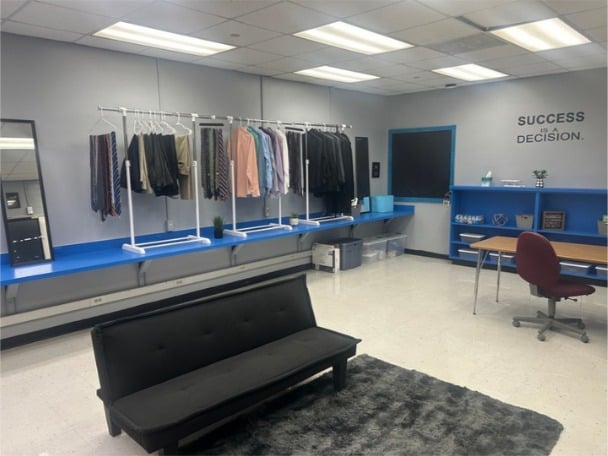
Suiting Students for Success
This team built a free formal-attire closet at G. Holmes Braddock Senior High through donations, a school sponsor and a permanent space. In its first weeks, four students visited, two found what they needed and the project's page passed 1,000 views.
- Community impact can mean removing a barrier to an opportunity.
- A project can be designed for sustainability beyond the students who started it.

Share the Care
Share the Care created mental health content and care kits for counselors, teachers and community members. When in-person plans proved unrealistic, the team pivoted to a more feasible two-part model.
- A cause you care about still needs research and a feasible plan.
- Teams have to adapt when geography, timing or logistics make an idea impractical.
In Their Own Words
From PALP's 2023–24 Community Service Project Survey and student project reflections.
This program definitely changed me for the better. Before this I would get scared just ordering something at a restaurant, but now I was able to get on call with multiple people to coordinate our drop off of supplies.
PALP student, 2023–24 Community Service Project SurveyWhen I first joined PALP… I always loved advocating for certain issues but I never got to go out and do anything about it… In less than 6 months… I was able to proudly carry boxes of over 3,000 menstrual products to women in need. But PALP gave me a lot more: a community, important life skills and most importantly a voice.
PALP student, 2023–24 Community Service Project SurveyPALP has shifted my perspective on community service. I realize now that I can make change in the world in many unique ways, and I don't need to wait for someone to tell me how.
PALP student, 2023–24 Community Service Project SurveyWith the service projects being student-led, I learned the importance of time management and good communication.
PALP student, 2023–24 Community Service Project SurveyNot a One-Day Service Project
You take part in a Community Impact Project from fall through spring. Your project must address a documented community problem affecting a specific group of people. You confirm the need, involve people or organizations connected to the issue, carry out a real solution and show evidence others can verify of what you did and what changed.
Five Non-Negotiables
What Does Not Qualify by Itself
Kindness, donations, awareness posts or raising money alone don't meet the requirement. They may count as service hours, but your project goes further.
Individual Accountability Matters
Your team's success doesn't count as your own. You must show evidence of your own assigned contribution. Attending meetings, agreeing with the group or joining a video call doesn't replace completed work.
Weekly Team Meetings
Your team meets weekly through April and keeps a simple record of who did what and what's next.
Recognition
The strongest verified project may be considered for the Outstanding Community Impact Project Award. Only team members whose own contributions are verified receive the recognition.