Welcome to the PALS FAQ Section

Use the menu below to navigat to the FAQ’s you’re looking for.

At PALS, our mission is to create a safe, welcoming, and inclusive community where every participant feels respected, valued, and free from judgment or harm. We believe fostering this type of environment requires collaboration from everyone involved—participants, parents, staff, and mentors alike.

This FAQ section is designed to provide clear answers and guidelines to ensure a positive and meaningful experience for all. Some policies outlined here are set by the universities hosting our programs, while others have been thoughtfully developed by PALS as experts in youth leadership and well-being. These policies reflect our commitment to creating an environment where students can thrive, learn, and grow.

We understand that conflicts or issues may arise during the program, and we are committed to addressing them thoughtfully and fairly. There may be times when restorative justice, such as a conversation or an apology, can resolve a situation. In other cases, more serious actions, including dismissal from the program, may be necessary to ensure the safety and well-being of everyone involved.

While some rules may seem strict, they are in place to protect everyone’s safety and uphold the values that make PALS a meaningful experience. We ask for your understanding and support in helping us maintain these standards as we work together to create a community built on respect, kindness, and inclusion.

If you have additional questions or need clarification, please don’t hesitate to reach out to our team. Together, we can ensure this is an unforgettable and enriching experience for all!

General PALS Information
What is PALS, and who is it designed for?
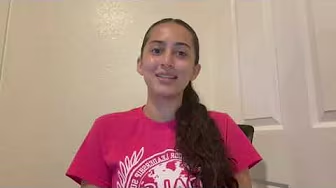
The Peace Ambassador Leadership Summit (PALS) is a week-long, youth-led leadership summit designed to develop leadership, communication, and life skills in high school students aged 14–18. Each location has a unique theme, but all summits align with PALS’ overarching goals of personal growth, community engagement, and leadership development.

what is pals

PALS is organized by the National Voices for Equality, Education, and Enlightenment (NVEEE), a 501(c)(3) nonprofit organization committed to fostering resilience and leadership among youth.

what is pals

Yes, PALS welcomes international students. Participants are responsible for securing their travel arrangements, including visas, and should have travel insurance.

pals faq

PALS is youth-led and emphasizes experiential learning through interactive workshops, team-building activities, and real-world problem-solving. The program promotes inclusivity and a supportive environment where diversity is celebrated.

pals faq

Yes, PALS values inclusivity and diversity in all its forms, striving to create an equitable and welcoming environment where every participant feels respected and empowered.

what is pals

PALS focuses on a youth-led approach, interactive learning, and community engagement, setting it apart from traditional lecture-based programs.

pals faq

Yes, but they may not be in the same groups unless requested during registration.

what is pals

The student-to-staff ratio is 8:1, ensuring personalized attention and supervision.

what is pals

PALS is designed for students only. However, parents may attend designated ceremonies such as the opening or closing events.

what is pals
Program Structure and Curriculum
Where and when is PALS held?

PALS takes place annually at university campuses, each offering a unique theme:

    • University of South Florida (USF): June 10-15
    • University of Central Florida (UCF): June 17-23
    • Florida State University (FSU): June 25-30
    • Duke University (Duke): July 9-16
    • Georgetown University (GU): July 23–30
what is pals
  • 7:00 AM: Wake-up
  • 8:15–9:00 AM: Morning activities (e.g., yoga, meditation, running)
  • 10:00 AM–12:00 PM: Morning workshops
  • 12:00–1:30 PM: Lunch
  • 1:30–5:30 PM: Afternoon workshops and activities
  • 5:30–7:00 PM: Dinner
  • 8:00–10:00 PM: Evening activities (e.g., social events, group discussions)
pals faq

Each location features a specific theme, but the program maintains these core objectives:

    • Leadership, teamwork, and interpersonal skills.
    • Resilience and emotional intelligence.
    • Academic and career readiness.
    • Social responsibility and civic engagement.
    • Mental health awareness and inclusivity.
    • Community service and hands-on projects.
pals faq

Workshops are led by a mix of university professionals, including professors and experts in various fields, as well as trained junior counselors and senior counselors. These professionals bring their expertise to create an engaging and informative experience for participants.

pals faq

All locations follow core PALS objectives, but workshops are tailored to the theme of each campus.

what is pals

Yes, students will have opportunities to present during group activities and final presentations.

pals faq

Yes, activities include creative arts, journaling, and team-based challenges designed to foster self-expression.

what is pals
Logistics and Accommodations
Where do participants stay during PALS?

Participants and staff are housed in campus dormitories with separate floors by sex. Roommate assignments are based on age and sex, and roommate requests can be made during registration.

pals faq

No, participants are not allowed to visit dorm rooms they are not registered to, per university policy and safety guidelines.

pals faq

Meal plans are available for purchase. Some meals are catered by local restaurants, while others are provided through the school’s dining hall. Dietary restrictions are accommodated when noted during registration.

pals faq

Staff will assist participants in accessing nearby stores if essential items are forgotten. Parents may also send items to the campus.

what is pals

No, participants must remain on campus throughout the program and are not allowed guests from outside the program.

pals faq

Students will be supervised by junior and senior counselors, chaperones, and staff at all times.

pals faq

Yes, parking is available for local students. Parking charges may vary depending on the campus location. Detailed information about parking fees and procedures will be included in the welcome packet.

pals faq

Yes, designated drop-off and pick-up areas will be arranged for each campus. These locations, along with instructions, will be included in the welcome packet.

pals faq
Travel and Transportation
  • USF: Tampa International Airport (TPA)
  • UCF: Orlando International (MCO)
  • FSU: Tallahassee International Airport (TLH)
  • Duke: Raleigh-Durham International Airport (RDU)
  • GU: Reagan International (DCA)

NVEEE does not provide transportation to or from the airport. Participants should arrange carpooling or ridesharing via Uber or Lyft.

Yes, all participants, including local and international, are encouraged to purchase travel insurance.

Registration and Fees

Register online through our website. Space is limited, so early registration is encouraged.

Yes, partial scholarships are available based on financial need and merit. Visit our website for details.

Yes, payment plans are available. Contact the PALS team for more details.

All refunds will be processed minus the $50 application and credit card processing fees. A full refund must be requested no later than March 1st. 50% of tuition will be refunded if requested between March 2-30. There are no refunds after April 1st. If you are a scholarship recipient and cancel within 30, you will be responsible for a portion of the housing fee.

Yes, transfers are allowed under certain conditions. Contact the PALS team for details.

For Students

Yes, while the schedule is structured, students will have supervised free time to relax, reflect, and socialize with peers. Quiet zones are also available for those who need time to decompress.

A comprehensive packing list will be provided in the welcome packet, but it generally includes:

  • Comfortable clothes and personal items.

  • Two business casual outfits for special events or presentations.

  • Any medications or health-related supplies.

  • A readiness to learn, engage, and grow.

Students should bring essential items, including:

  • Notebooks and writing utensils.

  • A refillable water bottle.

  • Personal items they may need throughout the day, such as snacks or hygiene products.

Activities include:

  • Workshops on leadership styles and communication skills.

  • Team-building exercises and group discussions.

  • Creative arts for self-expression.

  • Community service projects aligned with program themes.

Due to liability reasons, participants will not have access to the university’s recreational facilities such as gyms, swimming pools (with specific permission and designated times), or sports courts. However, some outdoor spaces may be used for group activities or team-building exercises.

All participants attend the same core workshops. However, during Career Day, you will have the opportunity to select a workshop that aligns with your career interests.

Participants are grouped based on age and interests to ensure a supportive learning environment. Group activities are designed to encourage collaboration, peer learning, and the development of strong connections.

PALS is a supportive environment where you can develop public speaking and leadership skills at your own pace. Specific workshops are designed to help build confidence in self-expression and communication.

To maximize your experience:

  • Be open to meeting new people and trying new activities.

  • Step out of your comfort zone and actively engage in workshops and discussions.

  • Participate in all group and individual activities with a positive mindset.

The schedule is full, but some downtime may be available in the evenings. If you have pressing academic commitments, it’s recommended to plan ahead and manage your time accordingly.

Yes, the dress code at PALS reflects the professional nature of a leadership conference rather than a casual summer camp. Comfortable, casual attire is recommended for daily activities, but participants are expected to dress in a manner that is neat and respectful of the program’s environment.

You will also be asked to wear a PALS t-shirt on three occasions during the program, including group activities and special events. A t-shirt will be provided as part of your registration, and additional colors may be purchased if desired.

Please also bring two business casual outfits for presentations and special events, as these will be required for specific parts of the program. The goal is to ensure participants are dressed appropriately for the leadership-focused setting while remaining comfortable.

You will not be left alone without guidance. Campus maps will be provided, and PALS staff and junior counselors will always be available to assist you. If you need immediate help, contact your assigned junior counselor or staff member.

Yes, you can bring electronic devices, but we encourage responsible use. Some sessions and activities may require you to be fully present without distractions. Participants are also encouraged to take part in digital detox challenges.

Yes, free Wi-Fi is available across all campuses. Login details will be provided upon arrival.

No, participants are not allowed to rent scooters, bicycles, or other mechanical devices while on campus. For safety reasons, college campuses generally prohibit minors from using shared transportation services, such as electric scooters or bikes, due to liability concerns. These services require users to agree to terms and conditions that minors cannot legally consent to.

To ensure everyone’s safety, participants are expected to rely on walking or supervised transportation provided by the program when necessary.

If a participant is injured on campus, they will not have access to the university’s medical services, as these are reserved for enrolled college students. For minor injuries, participants will be taken to a nearby urgent care facility, and parents/guardians will be notified immediately.

In the case of a major medical emergency, 911 will be called, and all associated costs will be billed to the parents or guardians. PALS staff are not authorized to transport minors during serious medical emergencies.

Post-PALS Opportunities

PALS alumni are encouraged to remain engaged by participating in NVEEE’s year-round leadership and development programs. Alumni may apply to join the Peace Ambassador Leadership Program (PALP), the College Internship Program, or other eligible initiatives that align with their interests, readiness, and availability. These opportunities allow alumni to continue building leadership skills, gain hands-on experience, and remain connected to the NVEEE community.

Yes. However, Junior Counselor positions are not open for general application and are offered by invitation only. To be considered, a student must have previously attended a PALS location and must be willing to complete the full nine-month Peace Ambassador Leadership Program (PALP) training cycle, which runs from September through June. Invitations to join the Junior Counselor pipeline are typically extended at the end of the summer based on participation, readiness, and program needs.

Behavior, Ethics, and Digital Conduct

PALS enforces a zero-tolerance policy for all forms of bullying, harassment, or discrimination, including verbal, physical, and online behavior. Participants are expected to treat everyone with respect and kindness. Any incidents of bullying will be addressed immediately, with consequences ranging from a warning to dismissal from the program, depending on the severity.

Cyberbullying, catfishing, and any other forms of inappropriate online conduct are strictly prohibited. Participants are required to use social media and digital platforms responsibly. Any reports of cyberbullying or harmful online behavior will result in a thorough investigation and appropriate disciplinary action, which may include removal from the program.

Catfishing refers to creating a false identity online to deceive others. At PALS, honesty and integrity are core values. Any participant found engaging in catfishing or any form of deception will face immediate disciplinary action, which may include dismissal from the program.

If a participant violates the code of conduct or program policies (e.g., bullying, harassment, theft, substance use, or disrespectful behavior), the following steps will be taken:

  1. Initial Warning: The participant will receive a formal warning and be reminded of the program rules.
  2. Parental Notification: If the behavior persists or is severe, parents/guardians will be notified immediately.
  3. Dismissal: For serious or repeated violations, the participant will be sent home at their family’s expense. Participants will not be allowed to participate in any activities or workshops while waiting to be picked up.

No refunds will be issued in cases of dismissal.

PALS incorporates digital literacy and safety education into its workshops to teach participants about responsible online behavior. This includes sessions on recognizing and preventing cyberbullying, safeguarding personal information, and fostering a positive digital footprint.

Conflicts are addressed through guided mediation by trained staff or counselors. Participants are encouraged to communicate openly and respectfully to resolve misunderstandings. In cases where conflicts persist, staff will involve parents or guardians to develop a resolution plan.

Students experiencing bullying or emotional distress can approach trained staff, junior counselors, or peer mentors for immediate support. PALS provides a safe space for open communication, and additional resources are available for participants who require ongoing assistance.

Yes, participants are encouraged to use social media responsibly and respectfully. Posting inappropriate content, sharing sensitive information, or engaging in cyberbullying will not be tolerated. Participants are also encouraged to focus on the program and limit excessive social media use.

PALS strictly prohibits the possession or use of drugs, alcohol, tobacco, and any other contraband. Any participant found violating this policy will be sent home immediately at their family’s expense, and parents/guardians will be notified.

Trained staff, junior counselors, and peer mentors are available to provide emotional support throughout the program. PALS fosters a safe and supportive environment where participants are encouraged to openly share their feelings and seek help if needed. For more serious concerns, parents will be contacted to develop an appropriate plan of action. Additional resources, such as connections to mental health professionals or follow-up support, may also be provided as needed.

While PALS is committed to fostering a safe and supportive environment for all participants, there are certain types of support that we are not equipped to provide:

  • Medical Services: PALS staff are not trained to diagnose or treat medical conditions, including mental health disorders.
  • Therapeutic Services: PALS cannot offer therapy or counseling for participants with serious mental health needs, such as severe anxiety, depression, PTSD, or other clinical conditions.
  • Crisis Intervention: PALS staff are not equipped to handle emergencies requiring advanced mental health intervention or hospitalization.
  • Medication Management: While participants can bring their own medications, PALS staff cannot administer or monitor them beyond basic reminders.

If a participant requires any of these services during the program, parents/guardians will be notified immediately, and external professional support will be recommended.

Sexual Harassment, Conduct, and Unwanted Behavior

PALS has a zero-tolerance policy for sexual harassment in any form. This includes unwelcome advances, inappropriate comments, gestures, or actions of a sexual nature. All participants, staff, and volunteers are expected to uphold a respectful and professional environment at all times. Any reports of sexual harassment will be taken seriously, investigated promptly, and addressed in accordance with our policies. Consequences may include dismissal from the program without a refund and notification of parents or guardians.

If you experience or witness inappropriate behavior, including sexual harassment, unwanted advances, or any form of misconduct, you should:

  1. Report the incident immediately to a PALS staff member, junior counselor, or senior counselor.
  2. You can also submit a confidential report via the channels provided in your welcome packet.

PALS staff are trained to handle these situations with discretion and will ensure that the matter is addressed appropriately. Parents or guardians will be involved if necessary, and all efforts will be made to ensure the safety and well-being of everyone involved.

Sexual conduct, including consensual behavior, is not permitted during the PALS program. Participants are expected to maintain professional and respectful relationships with their peers. Violations of this policy will result in immediate disciplinary action, which may include dismissal from the program and parental notification.

PALS fosters a safe and respectful environment by:

  • Providing training to staff and counselors on recognizing and addressing harassment and misconduct.
  • Offering a clear and confidential reporting process for participants.
  • Monitoring interactions to ensure the program remains a safe and inclusive space for everyone.
  • Enforcing strict rules regarding appropriate conduct.

Unwanted advances or behavior of any kind—whether verbal, physical, or digital—are strictly prohibited. Participants who feel uncomfortable are encouraged to report the incident immediately to a staff member. All reports will be investigated, and appropriate action will be taken to address the behavior. This may include separating participants, contacting parents/guardians, or removing the individual responsible from the program.

Campus Safety and Emergency Preparedness

PALS prioritizes the safety and well-being of all participants. We work closely with the hosting universities to adhere to their campus safety protocols, which include:

  • Collaboration with campus police and security personnel.
  • Housing participants in secure dormitories with controlled access.
  • Maintaining an 8:1 student-to-staff ratio for supervision.
  • Training staff and counselors on emergency procedures, including fire drills, evacuation plans, and medical emergencies.

Participants are encouraged to report any safety concerns to a PALS staff member immediately.

In the unlikely event of an active shooter or similar emergency, PALS follows university-established protocols, which include:

  1. Shelter-in-Place: Participants and staff will remain in secure locations, such as locked rooms, until authorities declare the area safe.
  2. Emergency Alerts: While unregistered participants may not receive direct alerts from the university’s emergency system, PALS staff and mentors who attend the university will receive these alerts and relay the information to participants promptly.
  3. Trained Response: PALS staff are trained to guide participants calmly and safely in such scenarios.

Parents/guardians will be notified as soon as it is safe and practical to do so.

Before the program begins, participants will receive an overview of campus safety and emergency procedures. This includes information on:

  • Recognizing campus alert systems (e.g., text notifications, sirens).
  • Understanding that PALS staff will receive alerts and relay instructions to participants.
  • Knowing the nearest exits and safe zones.
  • Following staff instructions immediately during any emergency situation.

If a participant feels unsafe, they should immediately contact a PALS staff member or junior counselor. All concerns will be taken seriously and addressed promptly. For urgent matters, participants should also be aware of the campus police contact number, which will be provided during orientation.

Parents are encouraged to review the safety information provided in the welcome packet with their child. Discussing emergency preparedness and reassuring your child about safety measures can help them feel more confident during the program.

Don’t just stand by—step up! Apply now to join PALS and unlock your leadership potential. Together, we’ll make a difference that lasts a lifetime.

More FAQ about the Peace Ambassador Leadership

FAQ about the Peace Ambassador Leadership

37 Videos