🕒 7 minute read
Your student could have the GPA. The extracurriculars. The resume. And still walk into their first real opportunity completely unprepared for the moment that actually counts.
TL;DR
A 2024 survey found that 6 in 10 businesses already fired a recent college graduate, not for poor grades, but for lacking soft skills. PALS builds the five career-defining skills employers say are missing most: communication, emotional intelligence, self-advocacy, networking, and career clarity. One week. A real university campus. Real results.
Colleges and employers have been saying it for years: GPA opens the door, but it does not keep a student in the room. The Peace Ambassador Leadership Summit (PALS), a signature program of NVEEE, was built to close that gap. Every summer, PALS brings high school students in grades 9 through 12 to the campuses of leading universities for one immersive week, building the real-world skills that determine whether your student thrives in college, lands the internship, and leads when it counts.
The Numbers Every Parent Needs to See
A 2024 survey of 966 business leaders by Intelligent.com found that 6 in 10 companies had already fired a recent college graduate that year, not for budget reasons, but for performance. Three in four said their recent hires were unsatisfactory overall, citing poor communication (39%), lack of professionalism (46%), and difficulty managing workload without supervision. One in seven said they may stop hiring recent graduates altogether. This is not a character flaw. It is a preparation gap, and it shows up in skills no transcript has ever measured.
9 in 10 hiring managers say recent college graduates need etiquette and soft skills training before entering the workforce.
Intelligent.com survey of 966 business leaders, 2024These are learnable skills. They simply have to be practiced before the first interview. PALS was built to make that practice happen: in a real setting, with real professionals, at real university campuses. The five skills below are where the gap is widest, and where PALS has been doing the work.
1. Communication and Public Speaking
The skill employers want most, and the one PALS coaches every student to own before they leave campus.
The ability to speak clearly, hold a room, and adapt your message to your audience is the skill most employers say they cannot find in new graduates. It is not about being loud or extroverted. It is about knowing what you want to say and having the confidence to say it when it matters. Students who cannot communicate their ideas in an interview, a presentation, or a group project are invisible, no matter how strong their GPA is.
A 2024 survey of 800 HR leaders by Hult International Business School and Workplace Intelligence found that 98 percent name communication as the top skill they look for in new graduates, and more than 90 percent say today’s college programs are not adequately preparing students to demonstrate it.
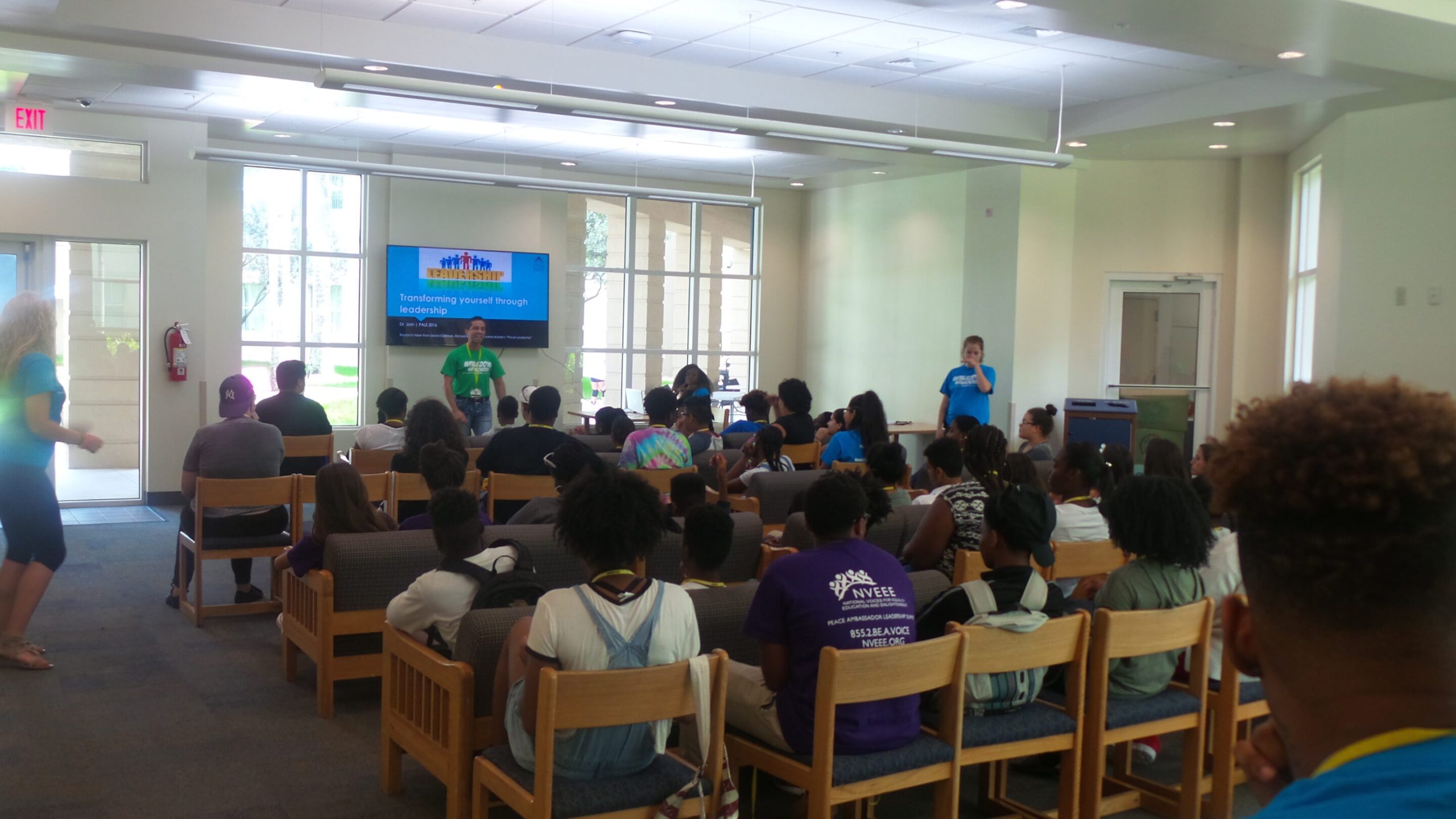
At the Peace Ambassador Leadership Summit (PALS)
Students practice real public speaking in front of actual audiences that include industry professionals, university professors, and current college students who have navigated the same path. They deliver elevator pitches, sit before mock interview panels, and lead group presentations with structured feedback on delivery, body language, clarity, and presence. Students who walked in afraid to raise their hand leave the week having presented to a room full of adults.
Try This at Home
Ask your student to tell you about something they care about and give them two uninterrupted minutes. When they finish, reflect back what you heard. This simple exercise builds articulation and teaches them their voice is worth the space.
2. Conflict Resolution and Emotional Intelligence
What separates students who thrive under pressure from those who shut down, and how one week at PALS begins to change that.
Emotional intelligence is the ability to recognize what you are feeling, understand what others are feeling, and navigate the space between without shutting down or blowing up. It is what determines whether your student can handle a difficult roommate, a demanding professor, or a team that is falling apart. It cannot be tested. It can only be practiced.
A 2025 study in Frontiers in Psychology analyzing data from 28,000 adults found that emotional intelligence is one of the strongest predictors of workplace performance, directly supporting an individual’s ability to problem-solve under stress, communicate effectively, and lead others through difficulty.
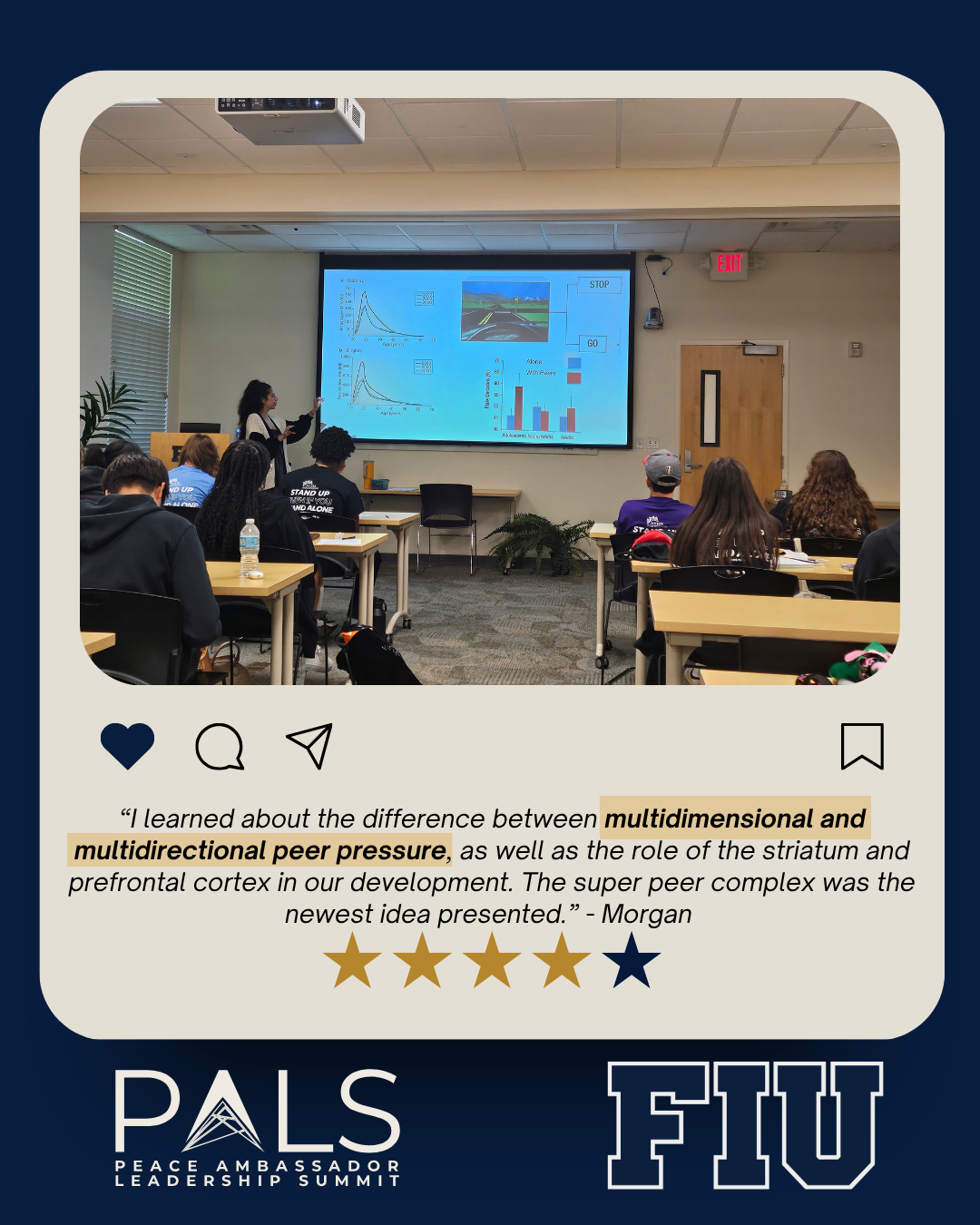
At the Peace Ambassador Leadership Summit (PALS)
PALS places students in a residential, cross-cultural group setting for an entire week, one of the most natural environments for emotional intelligence to be tested and grown. Guided by industry professionals, university faculty, and current college students who share their own real-world experiences, participants work through structured conflict scenarios, practice perspective-taking, and learn to manage group dynamics without shutting down or escalating. Several 2025 participants named conflict resolution as the most impactful skill they took home.
Try This at Home
The next time your student has a conflict with a friend or sibling, ask them one question before they vent: “What do you think the other person was feeling?” That single question builds empathy faster than any lecture about being the bigger person.
3. Confidence and Self-Advocacy
The skill that keeps your student from going silent at the exact moment their voice matters most.
Self-advocacy is knowing how to ask for what you need, push back when something is wrong, and speak up when silence is easier. Most students arrive at college without any practice in this. They do not email professors. They do not ask for extensions when they are struggling. They wait for someone to notice. That habit is costly, and it is fixable before they leave home.
Research published in 2025 in the International Journal of STEM Education found that first-year college students consistently describe asking for help as something that “feels like a weakness,” a perception that keeps them from using the very resources that determine whether they succeed or quietly fall behind.
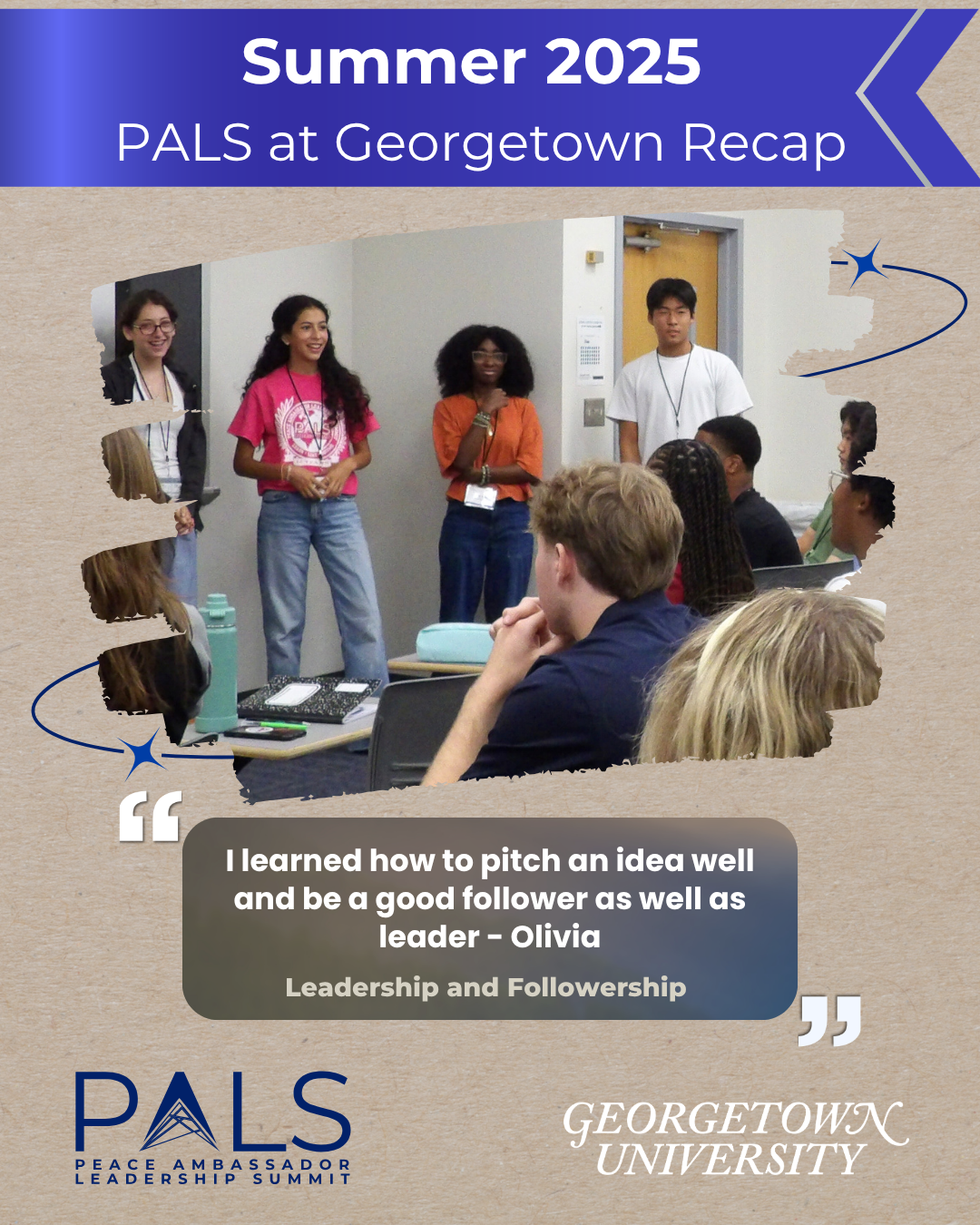
At the Peace Ambassador Leadership Summit (PALS)
PALS is structured to make self-advocacy unavoidable, in the best possible way. Students are placed in settings that require them to lead without being appointed, ask for what they need from professionals who expect them to, and advocate for their ideas in front of mentors who are genuinely listening. University professors and recent college graduates on the PALS team share candidly what they wish they had known before arriving on campus. In the 2025 Post-PALS Survey, 83 percent of participants rated their confidence in building new relationships at the highest level after just one week.
Try This at Home
Notice whether your student speaks up for themselves when something goes wrong, at a restaurant, with a teacher, in a group project. When they do not, do not fix it for them. Say: “What would you want to say if you could?” Then let them practice saying it out loud.
4. Networking and Social Connection
PALS puts your student in a room with professionals, professors, and peers from across the country, and teaches them exactly how to make that room work for them.
Networking is not schmoozing at events. It is the ability to walk into an unfamiliar room, introduce yourself to someone you do not know, and leave having made a real connection. It is how internships are found, how references are built, and how opportunities that are never posted publicly end up going to the students who showed up. Many students who struggle with this are not shy. They simply have never been put in a room where they had to practice.
According to LinkedIn’s Economic Graph workforce data, 54 percent of U.S. workers in 2025 reported being hired through a personal connection, and referred candidates are four to five times more likely to be hired than those who apply cold. The network your student builds before they graduate is not a bonus. It is the strategy.
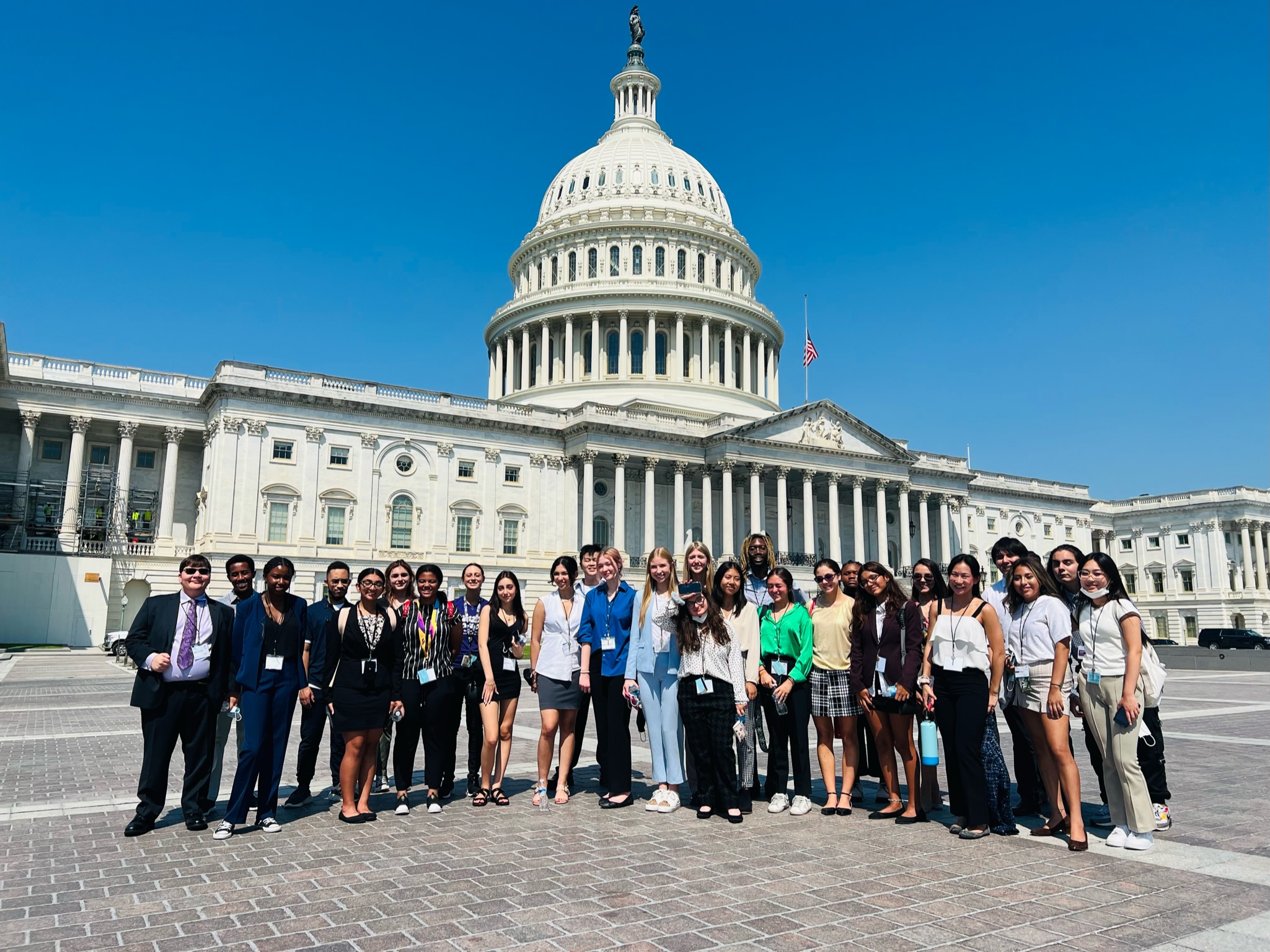
“Networking was probably the main skill I learned and something I strengthened was my social skills.”
2025 PALS ParticipantAt the Peace Ambassador Leadership Summit (PALS)
PALS is a week-long practice run for the real world. Students live on campus, share meals, and collaborate daily with peers from across the country alongside the industry professionals, university professors, and current college students who guide the program. Every interaction is a networking opportunity, and students are coached in real time on how to introduce themselves with confidence, hold a conversation beyond small talk, and follow up in a way that gets remembered.
Try This at Home
Google your student’s name with them. A college admissions officer or future employer will do the same search, so talk about what their digital presence says about them and what they want it to say.
5. Career Clarity
One week at PALS can give your student more direction than four years of waiting to figure it out on their own.
Career clarity is not about knowing exactly what your student wants to be. It is about knowing what problems they want to solve, what environments they thrive in, and what values they refuse to compromise. Students who have this clarity choose better majors, pursue better opportunities, and advocate for themselves more effectively because they have a reason to. Students without it drift, change majors multiple times, and graduate without direction.
Research using National Student Clearinghouse data published by the American Academy of Arts and Sciences found that 47 percent of college students changed their primary major at some point during their studies. Changing majors is not always a problem, but doing it without direction adds time, cost, and stress that students with early clarity avoid entirely.
At the Peace Ambassador Leadership Summit (PALS)
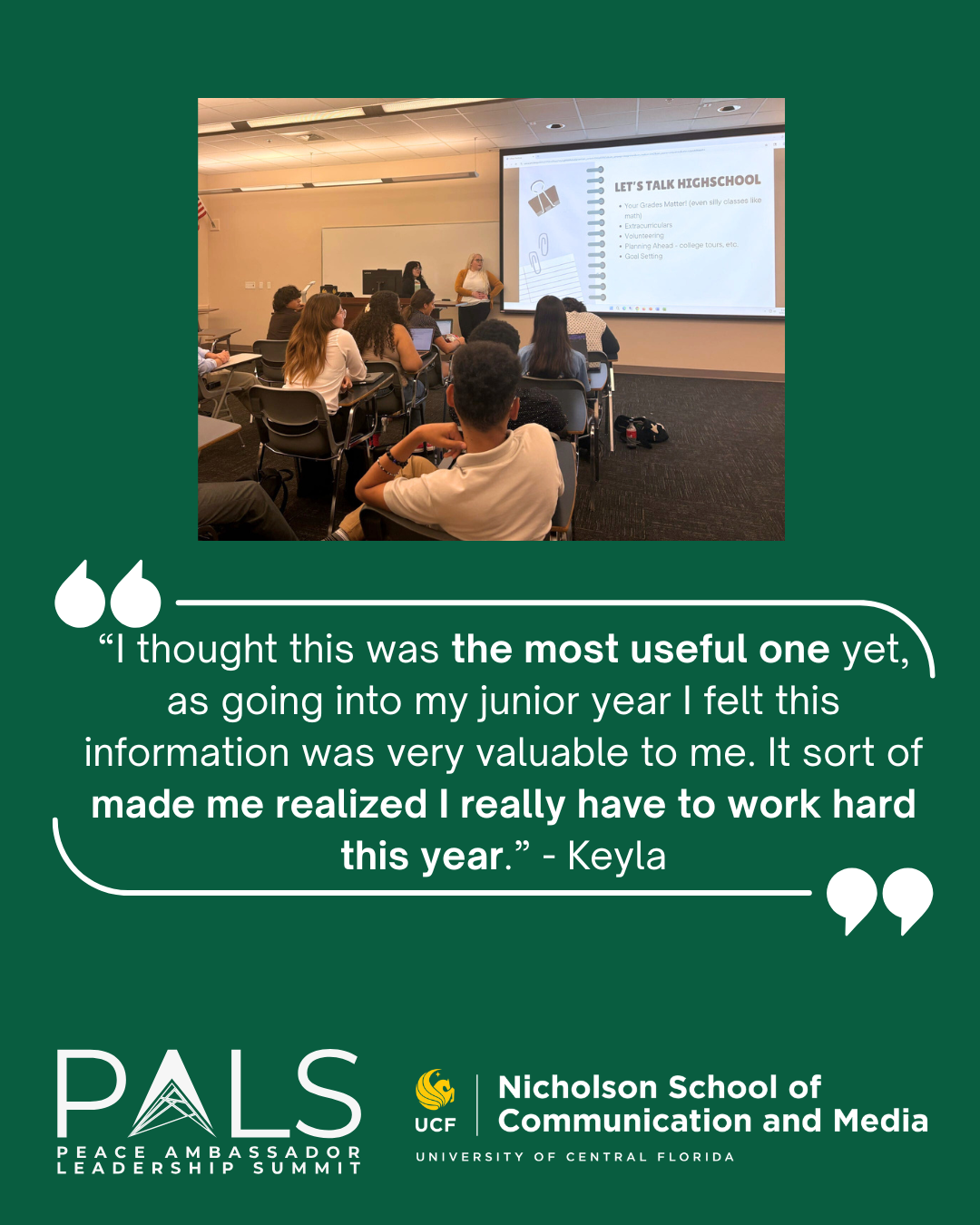
Each PALS campus is built around a distinct career and leadership theme, from STEM and critical thinking at Duke to civic advocacy and public voice at Georgetown. Students hear directly from professionals in those fields, work through structured modules on college planning, scholarship readiness, and professional branding through the PALS Learning Portal, and spend the week surrounded by people who can speak honestly about what their own path actually looked like. In the 2025 Post-PALS Survey, every single respondent said they left with ideas they were actively pursuing.
Try This at Home
Ask your student one question they have probably never been asked: “What problem do you want to solve in the world?” That question opens a completely different conversation and gives you both something real to work with.
2026 PALS Programs: Find the Right Fit
Five universities. Five unique themes. One week that could change the direction of your student’s life. Open to students in grades 9 through 12, with limited spots each session.
“Lessons I’ve learned during PALS is to stay focused and forge your own path, even though others may not walk with you.” — Natalia Balerdi, 2025Learn More & Apply ›
“PALS inspired me to spread positivity wherever I go by being a leader who can comfort others, understand others, and communicate with others.” — Jaylee Favor, 2025Learn More & Apply ›
“Through group discussions, I became more aware of my habits and learned to be more considerate of others.” — Morgan Connor, 2025Learn More & Apply ›
“I became more interested in environmental issues related to technology and now hope to pursue a career in conservation and sustainability.” — Olivia Ervin, 2025Learn More & Apply ›
“PALS showed me that real leadership means committing deeply, not just participating.” — Angelina Perenzuela, 2025Learn More & Apply ›
Ready to give your student the edge? PALS builds these five skills in a single, transformative week. Join one of our free monthly information sessions to learn more about the program and how to enroll.
Questions? Visit nveee.org/pals or email pals@nveee.org