You've Been Selected to Prepare to Lead at PALS.
Being invited into NVEEE's Junior Counselor in Training pathway means we see leadership potential in you, and now we're giving you the opportunity to develop it.
Over the next several months, you'll do much more than learn about leadership. You'll practice it. You'll help shape PALS, take on real responsibilities in the Peace Ambassador Leadership Program (PALP), build college and life skills, learn how to facilitate and support other students, complete intensive training, receive coaching and feedback, and prepare to serve as part of the team that helps bring PALS to life.
What Is PALP?
The Peace Ambassador Leadership Program: NVEEE's leadership pathway that runs October through June.
What Makes Junior Counselor in Training Different?
A focused track inside PALP where you train, practice, and prepare to serve as a Junior Counselor at PALS.
Respond By
Thursday, October 1, 2026. Use the button below to accept or decline.
First, What Is PALP?
PALP stands for the Peace Ambassador Leadership Program: NVEEE's year-round leadership program that runs October through June and leads into the summer events, the Peace Ambassador Leadership Summit (PALS), hosted on multiple college campuses. If you've mainly heard of PALS, PALP is the year-long program that leads up to it.
General PALP Participants
Students in PALP build leadership skills, college and career readiness, and life skills throughout the year, and complete a Community Impact Project.
Junior Counselors in Training
Junior Counselors in Training do everything general PALP participants do, plus the additional leadership pathway described on this page: extra responsibilities, the required Junior Counselor Service and Training Retreat, and a path to earning Junior Counselor status at PALS.
Everyone in PALP, Junior Counselors in Training included, is expected to meet the regular PALP baseline: attend at least 7 of 9 PALP Core sessions (October–June), participate in fundraising campaigns, take part in at least 5 designated NVEEE/partner/community events, and complete the Community Impact Project. Junior Counselor in Training responsibilities are in addition to this baseline, not a replacement for it.
Virtual participants are not required to travel in person to meet this requirement. NVEEE provides virtual and remote-equivalent options for these events and sessions.
Junior Counselor in Training vs. Junior Counselor: What's the Difference?
You've been invited to become a Junior Counselor in Training. That is different from already being appointed a Junior Counselor.
Junior Counselor in Training is NVEEE's year-long leadership-development and readiness pathway. Students receive training, practice leadership in real situations, help prepare PALS, receive feedback and demonstrate their readiness over time.
The Junior Counselor title is earned after successfully completing the required PALP participation, leadership experiences, training, readiness assessments and final PALS operations clearance.
Your Junior Counselor in Training Pathway
Prepare
- Selected for Junior Counselor in Training
- Train + Practice
- Help Build PALS
Junior Counselor Service and Training Retreat
- Junior Counselor Service and Training Retreat
- Lead + Facilitate
Clearance
- May Readiness Capstone
- June Operations Clearance
Earn It
- Earn Junior Counselor Status
- Serve at PALS 2027
You Do Not Have to Live in South Florida to Be Fully Part of This Team.
Many of our 2027 Junior Counselors in Training first joined PALS at campuses outside South Florida, including students who live in other states. That means this pathway is being designed from the beginning, not retrofitted later, for students who will participate virtually during much of the year.
Virtual does not mean passive. You will not spend the year watching someone else lead on a screen.
Live Facilitation
Junior Counselors in Training facilitate short activities, lead discussions, give directions, manage breakout-room tasks and practice coaching in real time.
Consequential Roles
Virtual students receive responsibilities that affect the actual work: campaigns, project milestones, PALS planning, rehearsal, outreach, activity testing and team preparation.
Small-Group Interaction
Sessions regularly use breakouts, peer coaching, simulations and rotations instead of long lectures.
Real People, Not Only Screens
Career/mentor conversations, partner interactions and approved local or virtual equivalents create direct interaction with adults, professionals and other students.
Evidence of Practice
Students show what they did, explain their reasoning, receive feedback and improve, not simply log into Zoom.
National Cohort Connection
Students from different PALS campuses build relationships before summer, so PALS 2027 isn't the first time the team has worked together.
In-person anchor: the required Junior Counselor Service and Training Retreat gives the cohort an extended face-to-face experience before summer service.
You're Preparing for PALS. You're Also Preparing for What Comes After High School.
Becoming a stronger Junior Counselor is one outcome of this experience, but it isn't the only one.
Junior Counselor in Training is an advanced leadership pathway within NVEEE's Peace Ambassador Leadership Program. Your year also includes college preparation, career readiness and practical life skills based on where you are in high school and what you need next.
The same skills that help you lead a group at PALS are the skills you'll use in a college classroom, on a group project, in an internship interview, when communicating with a professor, while managing your own money, navigating a difficult relationship, speaking up for yourself or figuring out what to do when a plan falls apart.
College & Career Readiness
Researching opportunities, communicating professionally, networking, interviewing/presenting, working with mentors and adults, managing deadlines, asking better questions and self-advocacy.
Leadership & Communication
Public speaking, facilitation, active listening, teamwork, feedback, group dynamics, conflict response and communication under pressure.
Real-Life Decision-Making
Managing time and priorities, money and financial choices, evaluating information, using AI responsibly, deciding with incomplete information and knowing when to ask for help.
Relationships & Well-Being
Boundaries, healthy communication, disagreement, stress, helping without taking over, recognizing when adult/professional support is needed.
Same Leadership Community. Different Next Step.
A ninth grader and a senior should not spend the year doing the exact same future-readiness work. Junior Counselors in Training develop together as one leadership team, while college, career and life preparation changes by grade level.
Same core leadership skills. Different challenge based on what comes next for you.
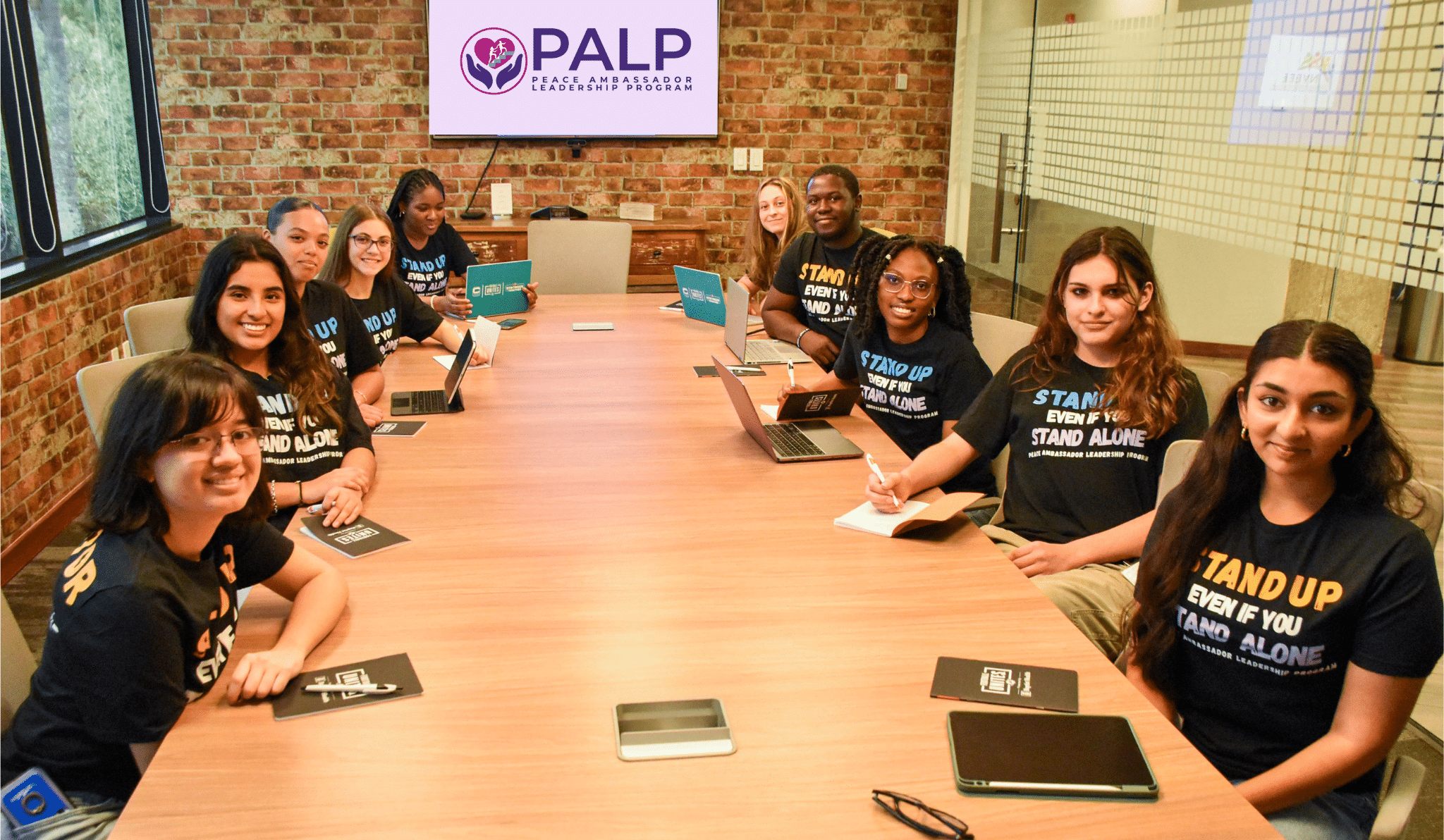
You Have a Leadership Role in PALP Now
Junior Counselors in Training participate in the full Peace Ambassador Leadership Program, but they also take on additional responsibilities that prepare them for PALS.
Depending on the activity and your stage of training, you may facilitate discussions or activities, support PALP projects and presentations, help students rehearse, take responsibility for pieces of NVEEE campaigns and events, help include quieter or virtual students, practice handling group challenges, assist with program preparation and take responsibility for work other people are depending on.
You will not be expected to know how to do all of this on Day One. Responsibilities increase as you develop your skills, and you will receive instructions, practice, coaching and feedback along the way.
Workload permitting, Junior Counselors in Training may also take on a named PALP Student Leadership role: Chair, Vice Chair, Community Impact Project Support Lead, or Workshop & Facilitation Lead.
You Help Build PALS Before You Lead at PALS
PALS doesn't begin when students arrive on campus. Junior Counselors are part of preparing for it.
Throughout the year, Junior Counselors in Training will have opportunities to contribute to PALS planning and preparation: testing activities, giving feedback about what students your age will actually respond to, practicing workshops before they're used, helping prepare materials, reviewing student-facing activities, supporting project and presentation preparation, contributing programming ideas and assisting with other pieces of PALS preparation.
By summer, you should understand the program, know your team, have practiced the skills you'll need and be ready to step into real responsibility.

See what goes into building PALS.
What Will You Actually Learn?
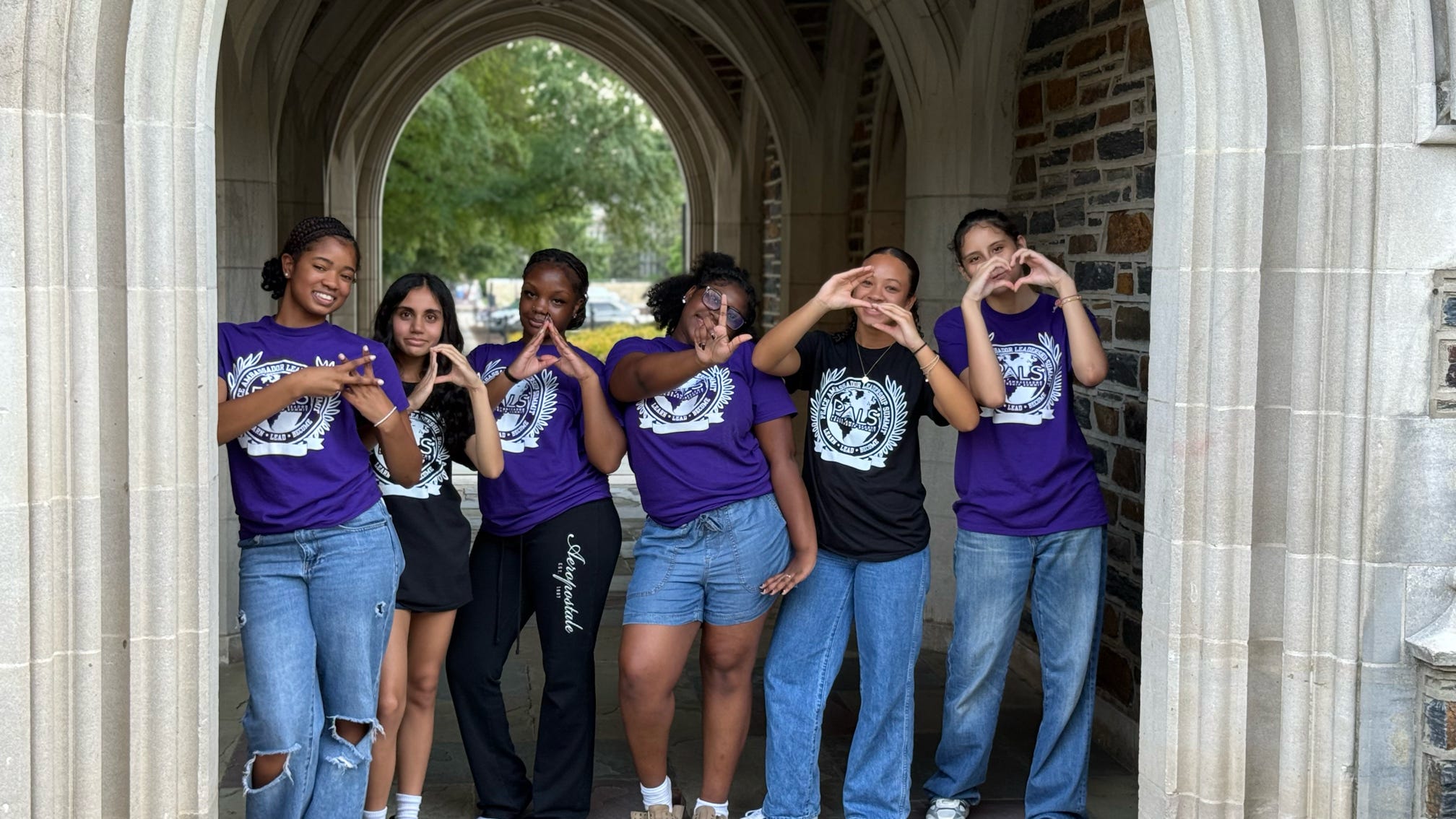
Facilitation and public speaking aren't abstract goals here. Junior Counselors in Training learn from PALS leaders who started exactly where you are now.
Pictured: PALS Junior Counselors at Duke University.
Facilitation & Public Speaking
Guide a discussion, explain an activity, ask better questions, manage time and speak confidently without dominating the room.
Group Leadership
Get a group moving, encourage participation, manage different personalities and keep people focused.
Communication & Listening
Give clear directions, listen before reacting, communicate professionally and adjust your approach for different people.
Conflict Response & Problem-Solving
Respond when students disagree, someone shuts down, a group gets off track or a situation needs adult support.
Inclusion & Belonging
Notice who is not being heard, create space for different personalities and perspectives and help students feel part of the group.
Professionalism & Accountability
Prepare, meet deadlines, communicate when something goes wrong and understand when others are depending on your follow-through.
Project & Presentation Coaching
Help another student improve an idea or presentation without taking over their work.
Event & Program Planning
Understand how a program like PALS moves from idea to actual experience and what has to happen behind the scenes.
Boundaries, Safety & Judgment
Know the difference between being a youth leader and adult staff, when to help, when to step back and when something must be escalated.
Leadership Under Pressure
Think, communicate and make responsible decisions when plans change.
Your Junior Counselor in Training Year at a Glance
Junior Counselor Service and Training Retreat
All Junior Counselors in Training are required to participate in NVEEE's multi-day Junior Counselor Service and Training Retreat. Monday, February 15 is the return travel day and Presidents Day holiday.
This is not six days of sitting in a classroom. Students will learn through demonstrations, realistic PALS scenarios, role-play, team challenges, live facilitation, feedback and opportunities to try again.
Training focuses on facilitation, group management, communication, conflict response, inclusion, mentoring boundaries, professionalism, safety judgment, teamwork and leadership under pressure.
The retreat also gives a largely virtual national cohort meaningful face-to-face time to build trust and relationships before they are expected to live and work together during PALS.
Junior Counselors in Training stay together in Airbnb-style group housing for the week. Additional travel, packing, supervision and family information will be provided to accepted Junior Counselors in Training.
Junior Counselor Service and Training Retreat Cost
$350
This cost is separate from the PALP program fee. Payment plans are available at registration if you combine this cost with your PALP payment. Full payment is due by January 14, 2027.
Your 8-Month Leadership Portfolio
To complete the Junior Counselor in Training program and be cleared as a Junior Counselor, you must complete all of the requirements below over your 8 months in the pathway. We look at what you do, not just whether you show up.
- 4+Distinct live facilitation or leadership experiences.
- 1+Real NVEEE/PALP event or campaign leadership responsibility.
- 1Defined Community Impact Project leadership responsibility.
- 2+Project or presentation coaching/rehearsal experiences.
- 1+Documented inclusion, accountability or problem-solving example.
- RequiredParticipation in the February Junior Counselor Service and Training Retreat.
- RequiredCompletion of the May readiness capstone.
- RequiredCompletion of June PALS Operations Readiness.
Regular PALP attendance alone does not satisfy these leadership requirements. The goal is not to collect assignments. The goal is to build enough real experience that leading at PALS does not feel like your first time leading.
Community Impact Project: Lead Something That Matters
Junior Counselors in Training participate in PALP's Community Impact Project alongside the full cohort, but are required to take on a primary leadership role within the project.
That may mean coordinating part of the team's work, managing a deadline, solving a problem, communicating with a community partner, helping prepare the presentation, supporting teammates or taking responsibility for an important project deliverable.
Junior Counselor in Training leadership does not mean doing everyone else's work. Part of becoming a stronger leader is learning how to help a team succeed while still holding each person accountable for their own contribution.

From Training to Readiness
There is no single surprise test that determines whether you become a Junior Counselor. NVEEE looks at your full year of preparation: reliability, communication, facilitation, judgment, inclusion, project leadership, preparation, professionalism, response to feedback and demonstrated growth.
May Readiness Capstone
Ready
You have demonstrated the required readiness.
Ready With Coaching
You are close and will complete targeted coaching before final clearance.
Additional Preparation Required
You have not yet demonstrated all required competencies.
The goal is for students to know throughout the year how they are progressing. The May decision should never be a surprise.
June: PALS Operations Clearance
Before serving at PALS, every selected Junior Counselor in Training completes a required 90-minute PALS Operations Readiness session covering the topics below. If your May readiness result was Ready With Coaching, you'll also complete one additional 60-minute coaching session in June, focused on the specific skill area flagged in May, before you're cleared to serve.
- Chain of command
- Student safety
- When and how to escalate concerns
- Confidentiality and its limits
- Professionalism
- Documentation
- Program/residential expectations
- Appropriate authority and boundaries
- what Junior Counselors should and should not handle independently
Junior Counselors in Training support their peers. They are not counselors, and they are never expected to handle serious concerns alone. Knowing when and how to bring in an adult is part of the training.
Clearance results in one of three outcomes: Final Cleared to Serve, Cleared After Targeted Coaching, or Not Cleared: Remains a Junior Counselor in Training for this cycle.
Only after required preparation and final clearance does a Junior Counselor in Training earn the Junior Counselor title.
Then You Put It Into Practice: PALS 2027
Training is not the final destination. Students accepting a Junior Counselor in Training invitation are committing to being available to serve as a Junior Counselor at a minimum of one PALS 2027 Leadership Summit, after successfully completing readiness and clearance requirements.
- Facilitate activities and discussions.
- Support and encourage delegates.
- Help manage transitions and group activities.
- Coach student research projects and presentations.
- Reinforce group expectations.
- Help students work through ordinary disagreements within the JC role.
- Notice when a student may need additional adult support and escalate appropriately.
- Document concerns appropriately.
- Support program operations and work with NVEEE staff and the PALS leadership team.
Specific assignments depend on campus needs, student availability, demonstrated readiness and final NVEEE placement.
What Will You Walk Away With?
By the end of this experience, we want you to be more confident walking into a college classroom, an interview, a meeting, a difficult conversation, a leadership role or an unfamiliar situation, not because someone gave you a worksheet about it, but because you have already practiced doing hard things with real people.
Real Leadership Practice
Repeated opportunities to facilitate, coach, plan, communicate and solve problems.
College & Career Preparation
Grade-relevant future planning, professional communication, networking, interviews, opportunities and transition skills.
Life Skills
Time management, decision-making, money, relationships, self-advocacy, critical thinking and responsible AI use.
Résumé-Verifiable Experience
Actual titles, responsibilities and dates that NVEEE can verify when earned/completed.
College & Scholarship Stories
Real examples of leadership, growth, teamwork, resilience and impact to discuss in applications and interviews.
A National Leadership Network
Relationships with other motivated students, mentors, staff and professionals across PALS locations.
Résumé Language
While actively participating in the pathway, a student may accurately identify their role as: Junior Counselor in Training, NVEEE.
After final clearance and actual PALS service, a student may identify the earned role as: Junior Counselor, NVEEE Peace Ambassador Leadership Summit (PALS).
NVEEE verifies actual roles, responsibilities and dates of service. Recommendations and endorsements are based on demonstrated performance, contribution, reliability and growth, not participation alone.
Build Leadership Experience and Document the Hours
Your time as a Junior Counselor in Training isn't just training. It's documented service. Junior Counselors in Training earn verified community service hours for eligible PALP participation, leadership responsibilities, meetings, events, PALS planning and preparation, the Junior Counselor Service and Training Retreat, and, once cleared, service as a Junior Counselor at PALS.
PALP Hours
Junior Counselor Service and Training Retreat Hours
Potential Hours With One PALS Assignment
Once a cleared Junior Counselor serves at PALS, students earn 8 service hours for each PALS program day, plus service hours for required pre-program arrival and preparation. Serving at one six-day PALS brings the current documented total to approximately 156.5+ hours at a Florida PALS campus or 164.5+ hours at a PALS campus outside Florida. That total still doesn't count every variable Community Impact Project hour, campaign, additional event, independent mission or PALS planning assignment completed during the year.
College & Scholarship Applications
Students can demonstrate sustained service, leadership and community involvement, not just membership in an organization.
Florida Bright Futures
For eligible Florida students, documented NVEEE volunteer service may help fulfill Bright Futures volunteer-service requirements when the activities and documentation are approved according to the student's school or district requirements.
School & Local Service Requirements
Some schools, districts, states and scholarship programs require or recognize community service. Requirements vary, so families should confirm how NVEEE service hours may be applied with the student's school or scholarship program.
Résumés & Leadership Records
NVEEE can verify students' actual service hours, leadership roles, responsibilities and dates of participation.
Real service. Real leadership. Real experience you can document.
Scholarship, graduation and school service-hour requirements vary. Students and families are responsible for confirming approval and documentation requirements with their school, district or scholarship program.
Yes, It's Serious. It Should Also Be Fun.
Some of the strongest PALS relationships begin before the summer. Junior Counselors in Training will spend the year learning together, solving problems, traveling, completing team challenges, testing activities, laughing when something completely fails, trying again and figuring out what kind of leaders they want to become.
For a mostly virtual cohort, the retreat is especially important: it gives the team time to build the trust and relationships that matter when they are eventually living and working together during an intensive PALS week.
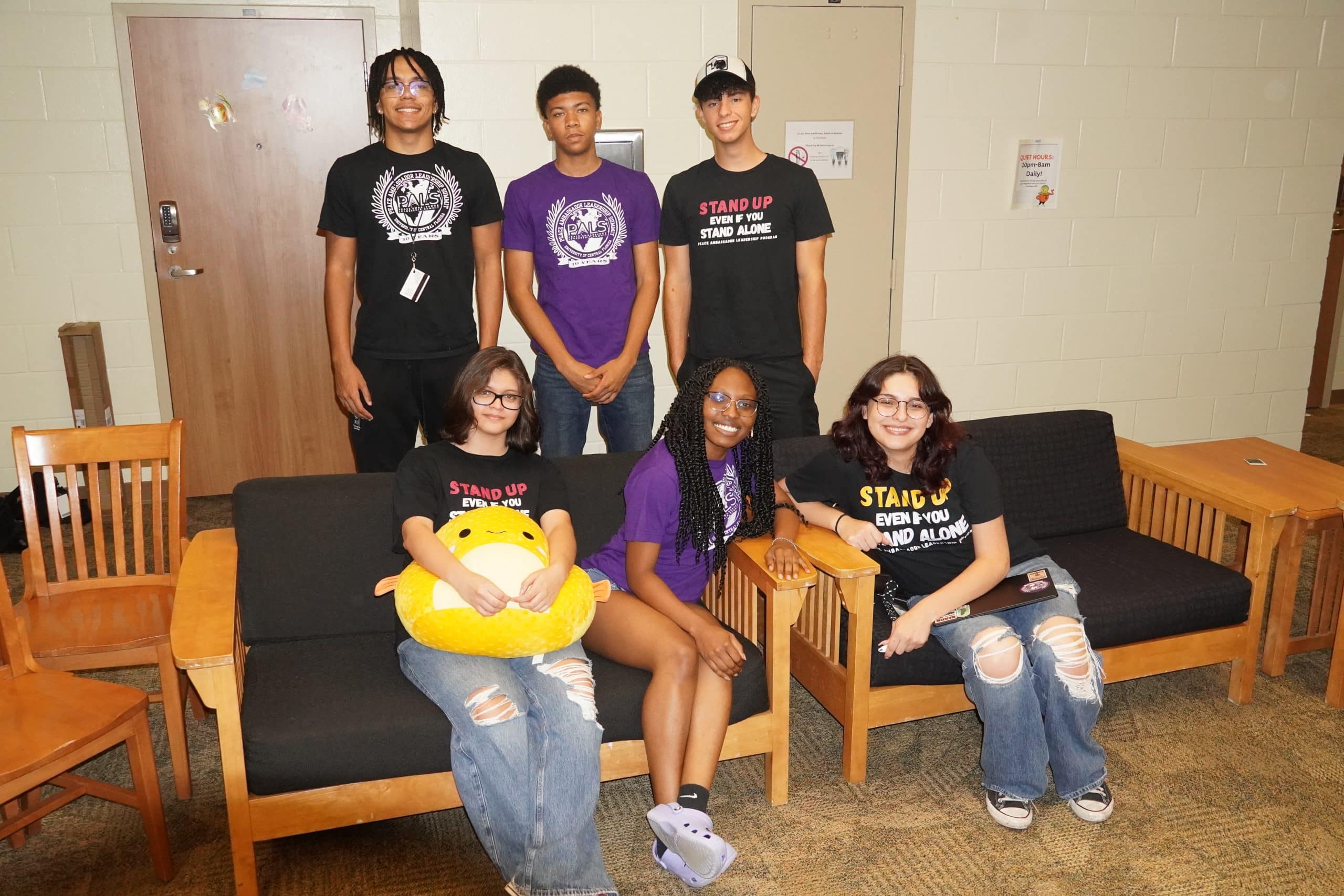
Leadership development should challenge you. It should not be boring.
Before You Say Yes: The Commitment
- Regular PALP ParticipationJunior Counselor in Training responsibilities are additional. Junior Counselors in Training must remain in good standing in regular PALP.
- Virtual Participation That Is ActiveCameras/technology expectations follow NVEEE policy, but students are expected to participate, speak, practice, contribute and complete assigned responsibilities, not simply log in.
- Year-Long Leadership PracticeComplete required facilitation, event/campaign, project, coaching and leadership experiences.
- PALS Planning & PreparationParticipate in assigned activity testing, planning and program-preparation work.
- Junior Counselor Service and Training RetreatAttend February 9–15, 2027.
- Feedback & GrowthAccept coaching, apply feedback and demonstrate growth over time.
- May Readiness CapstoneComplete the required readiness review.
- June Operations ClearanceComplete final PALS operational preparation and any assigned targeted coaching.
- Summer ServiceBe available to serve at a minimum of one PALS 2027 Leadership Summit if cleared and assigned.
- Professionalism & ReliabilityCommunicate, prepare, meet deadlines and follow through when others are depending on you.
Program Investment
The 2026–27 program fee reflects the expanded PALP and Junior Counselor training experience: the year-long PALP program plus the additional training and Junior Counselor Service and Training Retreat experience required of Junior Counselor in Training participants.
2026–27 PALP Program Fee
$250
Junior Counselor Service and Training Retreat / Junior Counselor in Training Costs
$350
Payment plans are available at registration, and full payment is due by January 14, 2027. Families should understand that the Junior Counselor in Training pathway includes substantial year-long training and a required multi-day Junior Counselor Service and Training Retreat.
FAQ
Does being invited mean I am already a Junior Counselor?
Can I fully participate if I live outside South Florida?
Will virtual meetings just be Zoom lectures?
Do I still participate in regular PALP?
Is the Junior Counselor Service and Training Retreat required?
Am I guaranteed to become a Junior Counselor?
Do I have to attend PALS during the summer?
Do Junior Counselors help plan PALS?
Is this only useful if I want to be a Junior Counselor?
Can I put Junior Counselor in Training on my résumé?
What happens if I am not ready in May?
How much does the program cost?
Ready to Step Into the Next Level?
You were invited because NVEEE believes you have the potential to grow into this responsibility.
The question now is whether you are ready to commit to the work, practice, feedback, teamwork, and fun that comes with it.
Accept or Decline
Students and families should review the expectations on this page together before submitting the commitment form.
Accepting means confirming in writing that you understand JC status requires regular PALP participation plus this additional Junior Counselor in Training training, and letting NVEEE know about any major scheduling conflicts you're already aware of.