
Do you consider yourself to be a leader? If not, are there leaders that you look up to in your life? Contrary to popular belief, being a leader isn’t always innate. While some individuals naturally possess leadership qualities, there are numerous ways to build your leadership skills. There are many different ways in which you can express leadership in your life, and in the fast-paced modern world, the ability to lead is becoming more valuable than ever.
Traits of a Good Leader
When you picture a good leader, what traits do they embody? Usually, a good leader can command a room, inspiring others as they do so. Being communicative is one of the most important qualities associated with being a leader. Those who are able to effectively and clearly articulate their ideas without fear of being judged are often who you will find occupying leadership roles.
Resilience and adaptability are other examples of traits that leaders tend to possess. A leader needs to be able to guide others even in the face of adversity, and resilience enables leaders to bounce back during challenging times. Resilience also allows leaders to stay focused on long-term goals even when short-term obstacles appear. Adaptability allows leaders to effectively guide others through evolving circumstances, new information, or unexpected events. An adaptable person is one that can thrive in dynamic environments, which is vital in leadership.

5 Leadership Styles
Though there are certain habits or traits that are typical amongst leaders, there is not just one singular way to lead. There are many different leadership “styles” one might choose to engage in. Democratic, authoritative, servant, transactional, and situational are just some of the many different styles of leadership.
1. Democratic leaders are leaders who encourage regular collaboration amongst team members and seek out diverse ideas and opinions rather than relying solely on their own. Democratic leaders focus on working directly together with whoever they are leading.
2. Authoritative leaders take the exact opposite approach, making decisions that are absolute and unilateral without consulting the other members of the team. Authoritative leaders focus on full control, rather than teamwork.
3. Servant leaders are leaders who focus on leading by serving and emphasize the needs of their team members when making decisions.
4. Transactional leaders take the approach of using reward and punishment (or transactions) in order to motivate their team, which highlights clear expectations and provides incentives to meet goals.
5. Situational leaders are the most dynamic leaders, as they adapt their style of leadership based on specific situations or needs of the team.
The Importance of Leadership Before Adulthood
Leadership isn’t only utilized by CEOs and politicians, it is a vital skill set that teenagers need to start cultivating today. Why? Because leadership skills are extremely important in the career space, with 83% of companies citing leadership as the most important quality to develop at all levels of business (Apollo Technical). However, leadership appears to be in short supply. 77% of companies report that leadership is lacking within their business (Apollo Technical), which further highlights the need for leaders in the next generation.
Putting aside the importance of leadership skills for potential careers that you work in down the road, the skill of leadership is fundamental in creating a well-rounded college application. One of the main details colleges scour through your application looking for is evidence of some sort of leadership position. While you might associate leadership positions with those that are linked directly to your high school, outside programs (such as our PALS program), can also be an advantageous asset to include on your college application.
Benefits of Leadership in Daily Life
Being a leader is incredibly beneficial beyond college and career development. Developing leadership skills is vital regardless of your role in society, as leadership is not exclusive to formal or professional positions of authority. Even smaller roles of leading can boost your confidence, open the door to new opportunities, and fulfill you personally. Leadership opportunities in sports, clubs, or other hobbies can be extremely valuable in developing these qualities.
Leadership can also have a positive impact on your personal life. For example, utilizing leadership skills can be useful when engaging with family and friends, whether that be to coordinate get-togethers, resolve conflicts, or provide emotional support in times of need.
Leadership Development at PALS
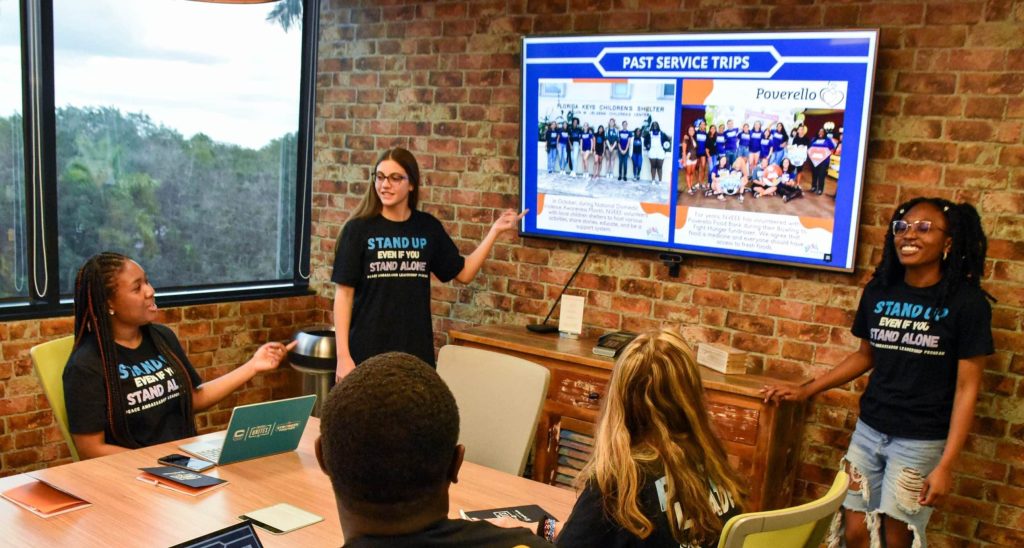
The Peace Ambassador Leadership Summit (PALS) is a program created by students, for students. PALS is a program that uniquely teaches students to lead, as it puts them directly into leadership roles. Through interactive workshops (taught by experts in the college community) and hands-on projects, attending members of PALS get exposure to vital leadership qualities, such as communication, teamwork, problem-solving, and critical thinking. This can contribute significantly to your ability to lead in your life outside of the PALS environment, as you are given the tools you need to face the often recurring real-life challenges that require you to make decisions and guide others.
PALS also has a unique role in teaching students how to lead through example, as they have the ability to serve as junior counselors. In this position, you get the opportunity to directly act as a leader and mentor towards your peers. This not only hones your leadership skills but also instills in you a sense of responsibility and empathy as you connect with others.